B2B marketing attribution is moving from dashboards to direct AI answers. Here's what that means for CMOs and agency leaders evaluating their reporting stack.
Ask-first reporting lets B2B marketing teams query their attribution data in plain language with built-in AI Assistants and external AI tools like Claude and ChatGPT, instead of building a dashboard first. Connections to external AI tools work through the Model Context Protocol (MCP) — an open standard that connects the assistant directly to unified, account-level marketing data — so questions about pipeline, channel performance, or account engagement get answered in seconds. Octane11's MCP integration is currently in beta for Claude and ChatGPT.
For years, good B2B marketing attribution meant a well-built dashboard, clean charts, the right filters, a KPI row that told the story at a glance. Dashboards have done their job, and they still do. But something new is happening alongside them, and it's worth paying attention to.
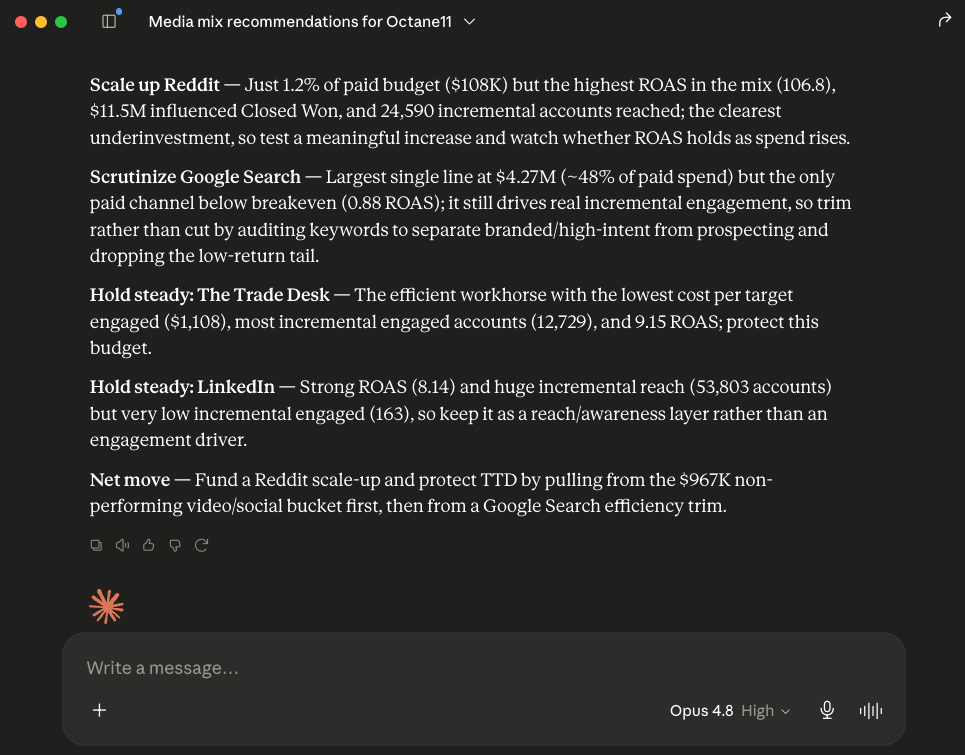
B2B teams are starting to ask their attribution data direct questions, in plain language, inside the AI tools they already use every day. Instead of opening a report and hunting for the right view, someone simply asks which accounts engaged across LinkedIn and Reddit last quarter, or how a campaign performed against the target account list, and gets a clear answer back. No filters. No export. Just a conversation with the data.
Call it ask-first reporting: the data comes to the question, instead of the question chasing the data through a dashboard. It's a genuine shift in how B2B teams practice account-based measurement, not a new feature bolted onto an old workflow.
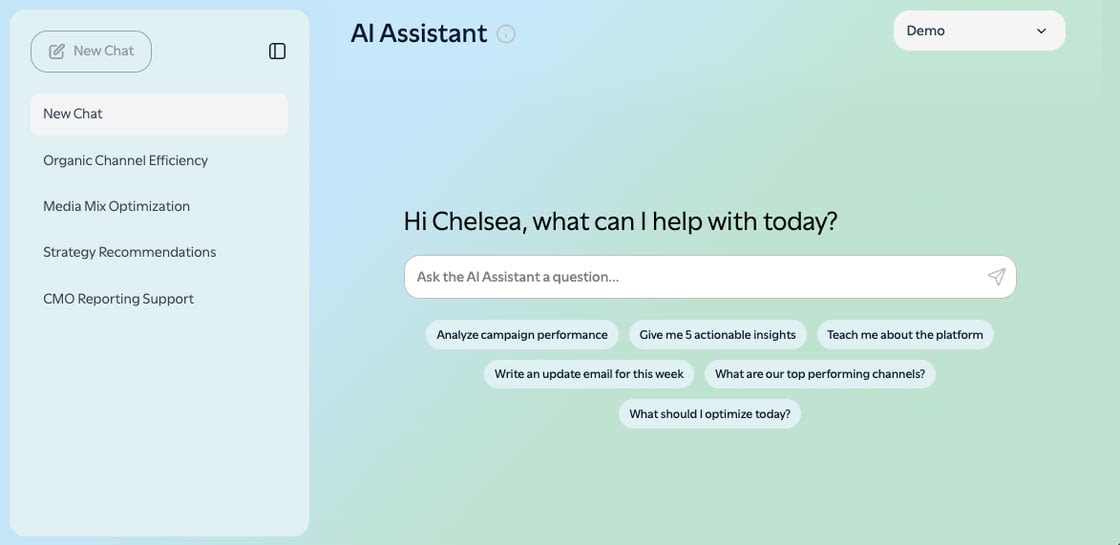
Octane11 fits into the way CMOs, agency leaders, and their teams already work. Claude and ChatGPT have become part of daily analysis and planning for a lot of marketing leaders. Bringing enriched, multi-channel data into that same environment, rather than asking people to leave it, is a natural next step.
The technology making this possible has a name: the Model Context Protocol, or MCP, an open standard that lets AI tools connect securely to a company's own data sources with enterprise-class permissioning and control. For marketing teams, that means unified, account-level attribution data can live inside the same assistant used for everything else, ready to answer a question the moment it comes up — and build custom visualizations and dashboards to suit every need.
That's a genuine channel-by-channel read on what's working. It's proof that a reach-oriented channel like LinkedIn still earns its place even with lower engagement, and a clear answer on whether upper-funnel spend is paying off. That used to take an analyst a day to build a slide for. Here, it's a question and an answer.
For agency leaders, this is where it gets really useful. Client conversations move fast. Being able to answer a question about account coverage or channel performance on the spot, instead of promising a follow-up report, changes the whole tone of the call. For CMOs, it means a board question about marketing ROI or pipeline influence gets a confident, specific answer, not a promise to follow up after the meeting.
B2B sales cycles run long, buying groups routinely include six or more stakeholders, and CRM data is rarely as clean as anyone would like.
These dynamics are exactly why full-journey measurement matters: research suggests roughly 80% of B2B deals are effectively decided before a prospect ever talks to sales, so most of the marketing that shaped the decision happened long before any single "converting" click.
An AI assistant doesn't change any of that on its own. It's only as good as the unified data and account mapping, which is exactly why robust data synthesis and domain resolution matter more than ever. The interface is evolving. The need for clean, unified revenue analytics underneath it hasn't changed at all, and if anything, it's become more valuable.
An AI assistant can only answer as well as the data connected to it. Strong cross-channel mapping and identity resolution remains the foundation everything else depends on.
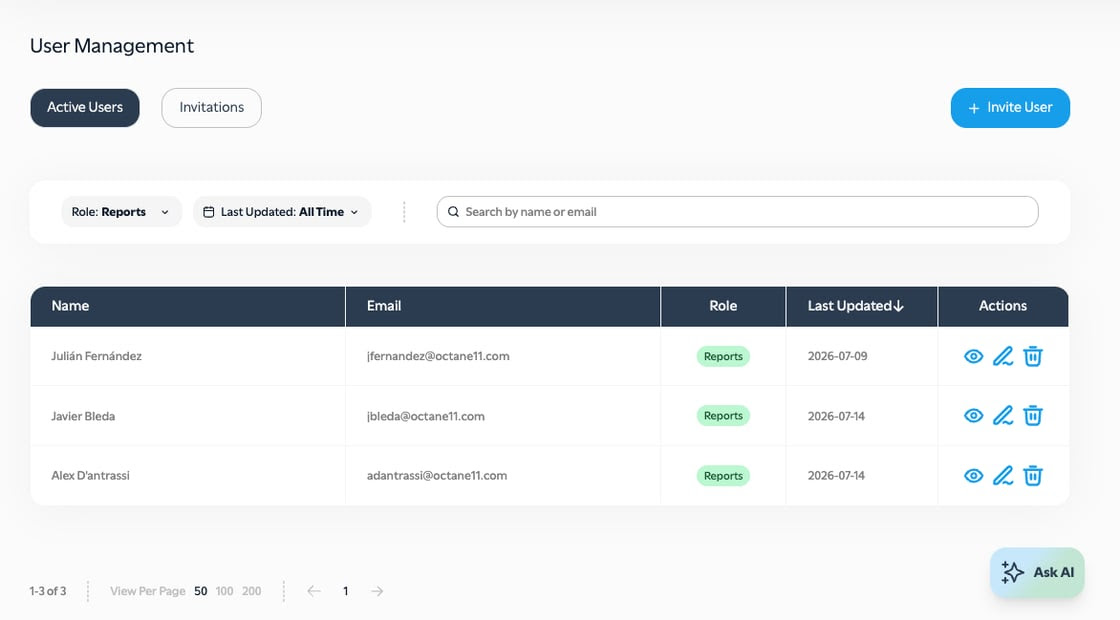
Getting a team set up to use it is simple too. Admins can invite, assign roles to, and remove users right inside the app, so bringing on a new hire or a client contact doesn't mean waiting on an IT ticket.
Octane11 has been building toward this for a while. Its own MCP integration is now in beta for Claude and ChatGPT, giving marketing and RevOps teams a way to query their unified, account-level attribution data right inside the tools they already trust.
Some clients are already extending that further, connecting it into agentic platforms like NinjaCat to build their own reporting and optimization workflows on top of it.
If you want to see what it's like to ask your own attribution data a direct question, our Demo site is a live sandbox, dashboards, CRM reporting, marketing influence, and the AI Assistant all included, and you're welcome to explore it at your own pace. If you'd rather talk through what this looks like for your specific team, we'd be glad to show you.
The questions marketing and RevOps leaders ask most about ask-first reporting and MCP.
MCP is an open standard that lets AI tools like Claude and ChatGPT connect directly to a company's data sources with enterprise-class security and control. For marketing teams, it means unified account-level attribution data can be queried in plain language, right inside the assistant they already use.
It means the platform can answer a direct, plain-language question, like which channels are driving pipeline or which accounts are engaged, without a person building a report first. The answer comes from the same underlying account-level data, delivered as a conversation or connected to an external AI platform to build custom visualizations.
Not necessarily. Standard dashboards remain useful for recurring, structured views. This shift gives teams additional, faster ways to get answers to the countless ad hoc questions that come up between reporting cycles as fast text responses or custom visuals.
Unified data across all channels and reliable account enrichment. An AI assistant can only answer as well as the data connected to it, so strong identity resolution across channels remains the foundation everything else depends on.
Yes, and it has to. A single deal often moves through several stakeholders engaging with multiple marketing touchpoints over months or quarters, so the useful question is rarely how many impressions were served, it's whether all the people involved in that specific decision were reached. That's the kind of question ask-first reporting is built to answer.
The built-in AI Assistant provides immediate, plain language answers and works for any team using the Octane11 platform. The connection to external AI platforms like ChatGPT and Claude is an optional feature that allows teams to access Octane11-enriched data within their existing workflows and to create custom analytics and visualizations.
Yes. The Demo site is a self-serve environment with live dashboards, CRM reporting, and the AI Assistant, built for exactly this kind of hands-on evaluation.
Yes. Through Octane11's Model Context Protocol (MCP) integration — currently in beta — you can connect your unified, account-level attribution data to Claude or ChatGPT and ask questions in plain language, such as which channels are driving pipeline or which target accounts engaged last quarter.
Yes. Octane11's MCP integration is in beta for Claude and ChatGPT, letting marketing and RevOps teams query their unified attribution data directly inside those assistants. Some teams also connect it into agentic platforms like NinjaCat to build custom reporting and optimization workflows.
Be sure to check out our blog, and reach out to your Account Representative or email us at contact@octane11.com with any questions or feedback! We'll see you next time!